

Magnetic whiteboards are often treated as the default "better" option - a premium upgrade that every serious buyer should choose. That assumption costs buyers money more often than it saves them frustration.
The truth is simpler: magnetic function is valuable in some environments and completely unnecessary in others. Paying for magnetic backing you'll never use is wasted budget. Skipping it in an environment that needs it creates daily friction that a slightly higher upfront cost would have avoided.
This guide breaks down exactly what magnetic backing does, when it earns its price premium, and how to make the right call - whether you're outfitting one office or sourcing hundreds of units for resale.
What "Magnetic" Actually Means on a Whiteboard
A magnetic whiteboard has a thin steel layer built into the board's backing, beneath the writing surface. This steel layer is what allows magnets to hold documents, papers, and accessories directly onto the board face.
A non-magnetic whiteboard uses the same writing surface material - typically melamine - but with a non-magnetic backing, usually a fiberboard or composite panel. The writing and erasing performance is identical between the two; the difference is entirely in what the board can hold in addition to dry-erase ink.
This matters because buyers sometimes assume magnetic whiteboards write or erase better. They don't. Magnetic function is an added capability layered onto the same core writing surface - not a quality upgrade to the surface itself.
When Magnetic Function Is Genuinely Worth It
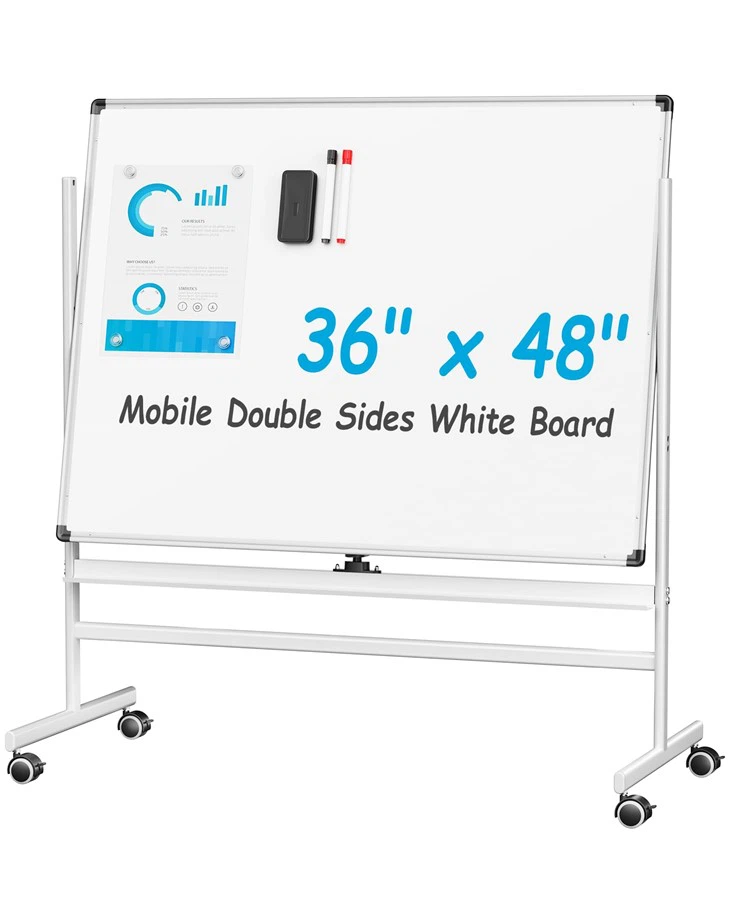
- Meeting rooms with document reference People bring printed reports or reference sheets into meetings and need them displayed alongside notes. Magnetic backing turns the board into a working document surface, not just a writing surface.
- Project planning / Kanban boards Teams using physical cards or magnetic sticky notes for visual project management get a flexible planning system instead of a static writing surface.
- Classrooms and training rooms Instructors combine printed diagrams or flashcards with handwritten notes on the same surface - no separate display needed.
- Shared office notice boards A board that doubles as an information hub - schedules, printed announcements, team photos - gets real day-to-day utility from magnetic backing.
When Non-Magnetic Is the Smarter Choice
- Personal desk boards A board used by one person for to-do lists rarely needs to hold documents. Paying extra for magnetic backing here pays for a feature that's likely never used.
- High-volume budget procurement For institutions outfitting many rooms with basic writing boards, non-magnetic delivers identical writing performance at a lower per-unit cost - a difference that compounds significantly at volume.
- Humid or poorly ventilated environments Steel backing in magnetic boards can be more susceptible to long-term corrosion than composite non-magnetic backing in these conditions.
- Lightweight or mobile applications The steel layer adds weight. For boards moved frequently or mounted on lower load-bearing walls, non-magnetic is easier to install and relocate.
Side-by-Side Comparison
| Factor | Magnetic Whiteboard | Non-Magnetic Whiteboard |
| Holds documents/cards with magnets | Yes | No |
| Typical cost | Higher | Lower |
| Durability in humid environments | Slightly more corrosion risk | Generally more stable |
| Mounting/installation | Requires stronger wall fixings at larger sizes | Easier for lightweight/mobile use |
The Question That Actually Decides It
Before choosing, ask one question: Will anything other than a dry-erase marker ever touch this board?
If yes - printed documents, task cards, reference sheets, team photos - magnetic function pays for itself in daily usability. If genuinely no - the board exists purely for handwritten notes - non-magnetic delivers identical core performance at a lower cost.
For procurement teams sourcing across multiple rooms, it's worth applying this question room by room rather than defaulting to one specification for the entire order. A mixed order - magnetic for meeting rooms, non-magnetic for personal desks - often delivers better value than standardizing on one type.
Decided you need magnetic? → Going with non-magnetic? →
A Note for Bulk Buyers and Distributors
For distributors stocking whiteboards for resale, offering both magnetic and non-magnetic options - clearly labeled and priced accordingly - lets end customers self-select based on actual need rather than defaulting to the higher-margin option out of uncertainty.
If you're placing a bulk order and unsure of the right ratio for your market, base it on end-use data: office and corporate buyers lean toward magnetic for meeting room applications; education and budget-conscious institutional buyers often split between the two depending on room type.
Frequently Asked Questions
- Can a non-magnetic whiteboard be converted to magnetic later?
No. Magnetic function comes from a steel layer built into the board's backing during manufacturing. It cannot be added after production - the choice needs to be made at the time of purchase.
- Are glass whiteboards magnetic?
Not by default. Standard glass whiteboards use a non-magnetic backing panel behind the tempered glass. Magnetic glass whiteboard options exist but are a separate specification, not the standard configuration.
- Does magnetic backing affect writing or erasing quality?
No. The writing surface material and coating are identical between magnetic and non-magnetic versions. The steel backing sits behind the writing surface and has no effect on how markers write or erase.
- Is a magnetic whiteboard heavier to install?
Yes, moderately. The steel backing adds weight compared to a composite non-magnetic panel of the same size, which may require sturdier wall fixings for larger boards.
- Can I mix magnetic and non-magnetic boards in one bulk order?
Yes. This is common practice - many buyers order magnetic boards for meeting rooms and collaborative spaces, and non-magnetic boards for personal desks or budget-focused areas within the same order.
Explore Wideny's Whiteboard Range
Wideny manufactures both magnetic and non-magnetic whiteboards across melamine, glass, and mobile formats - in standard sizes and custom specifications for bulk and OEM orders. Our team can help you determine the right magnetic-to-non-magnetic mix for your specific market and customer base.
[Browse Whiteboard Product Series] | [Get Bulk Quote]
Wideny - Office Storage & Whiteboard Solutions for Global B2B Partners www.wideny.com
Related Articles:
[What Is the Best Whiteboard for an Office? A Complete Guide (2026) →]
[How to Choose a Whiteboard Supplier for Bulk Orders: 7 Key Factors →]