


When people visit our factory or message us for the first time, one of the most common things they say is something like, "Honestly… all whiteboards look pretty similar. Are they really that different?"
We usually smile, because we hear this a lot. And to be fair, unless you work with these boards every day, it's hard to tell one surface from another. But after years of manufacturing and testing thousands of pieces, we've learned that the surface material changes everything-from how smooth the marker feels to how well the board survives years of use.
Below is a simple, honest breakdown of the main surfaces we work with. Nothing too technical-just the kind of explanation we usually give when a customer walks through our workshop and picks up different boards with curiosity.
Painted Steel Whiteboard

This is the one most people use without even thinking about it.
If you've seen a whiteboard in a school, office, or meeting room, chances are it's this type.
It writes smoothly, it erases easily, and it supports magnets-so people can stick notes, markers, or whatever else they like. It's reliable and practical, which is probably why it's still the worldwide favorite.
It's not perfect, of course. Heavy use over many years may leave faint marks, especially if someone forgets to clean it. But for most applications, it's more than good enough.
Glass Whiteboard

Now this one feels completely different.
Whenever someone touches a glass whiteboard for the first time, they usually say, "Wow, that feels nice."
It's glossy, modern-looking, and stays clean no matter how often people write on it. Even after years of use, it rarely shows ghosting. Because it's so durable, many design studios and modern offices choose it just for the clean aesthetic alone.
The downside? It's heavy, and that means extra care during shipping and installation. But people who want a high-end board rarely mind that.
Soft Whiteboard
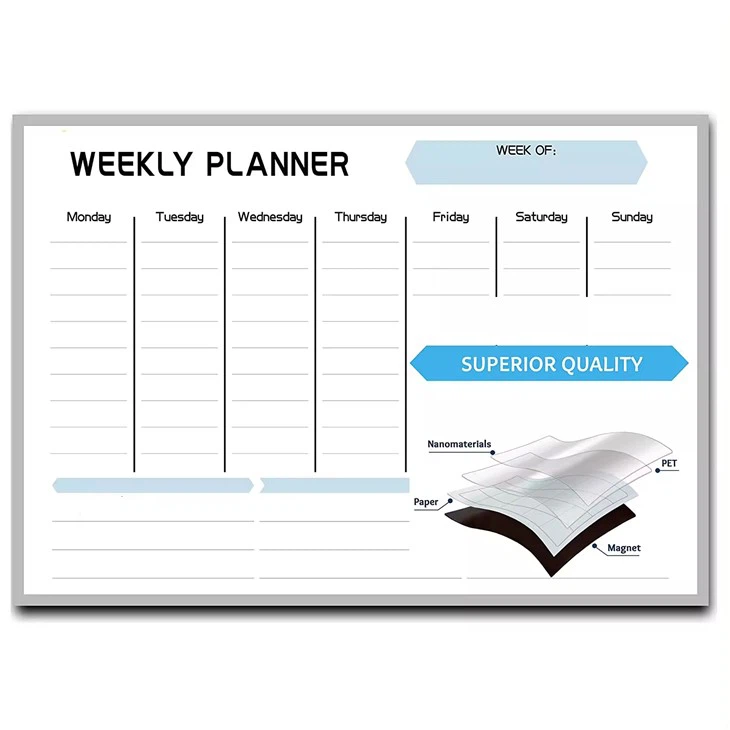
If you've ever unpacked a whiteboard that came in a small tube or flat envelope, it was probably this one.
This category has become extremely popular with e-commerce sellers because it's light, easy to ship, and easy to install.
It sticks to walls, doors, fridges-people get very creative with it. The trade-off is durability. It's not as long-lasting as a steel surface, and it doesn't hold magnets. But for families, students, or anyone who changes their setup often, it's a flexible option.
Felt Board

We always enjoy producing these because they bring color and warmth to a space.
They're not for writing-they're for pinning. Teachers love them, parents love them, and kids love them even more.
A felt board instantly makes a wall feel more "alive," and it's perfect for schedules, artwork, reminders, or anywhere that needs a softer, friendlier touch.
Over time, pinholes do stay, but most customers accept this as part of using a pin board.
Cork Board

Cork boards are a classic.
People have been pinning notes on them for decades, and there's something timeless about the natural texture of cork.
They're lightweight and easy to use, though they don't like humidity very much. Still, they remain one of the most requested boards for office and school environments.
Chalkboard (Green Board)

Though markers have largely taken over, chalkboards still have their loyal users.
Some teachers and artists prefer the matte surface and the way chalk glides across it.
The only complaint we hear is the dust. It gets everywhere. But for those who love the traditional feel, nothing else comes close.
Acrylic Board

Acrylic boards have gained popularity recently, especially among home organizers and planners.
They're lighter than glass, much harder to break, and look surprisingly clean once mounted.
They do scratch more easily than glass, but many people don't mind because they like the sleek, modern style and the lower cost.
What We Usually Tell Buyers at the End
After all the comparisons, customers often ask, "So which one should I choose?"
There's no universal answer, but here's the advice we've found ourselves repeating over the years:
- Offices usually go for painted steel-or glass if they want something modern.
- Schools often mix steel whiteboards with felt boards.
- E-commerce sellers love soft whiteboards, painted steel, and acrylic planners.
- Homes and apartments often prefer acrylic boards or felt boards.
- Bulletin spaces still rely on felt and cork.
Since WIDENY produces all these materials, we help buyers sort through the options based on their market, budget, and shipping preferences. After working with so many different regions, we've learned that the "best" board simply depends on the people using it.


