


In traditional office environments, whiteboards were typically fixed installations on conference room or office walls. They served as essential tools for brainstorming, meeting notes, and project planning-but with one undeniable limitation: once mounted, they stayed put, confined to a single space.
However, as modern workstyles evolve-agile work, hot desking, and cross-departmental collaboration become the norm-whiteboards are undergoing a quiet transformation. They are shifting from being "part of the wall" to becoming "mobile tools for collaboration."
1. The Limitations of Fixed Whiteboards: Space Constrains Collaboration
Wall-mounted whiteboards offer clear advantages: they save floor space, provide stability, and are built for long-term use. But in real-world office settings, they also present certain drawbacks:
- Fixed location limits flexibility – When teams need to discuss in different areas, they must return to the whiteboard, interrupting workflow
- Height is not adjustable – While suitable for standing use, they are uncomfortable for seated meetings or children
- Cannot move between spaces – From conference rooms to open offices, from project teams to management, the whiteboard cannot follow the flow of work
With the rise of hybrid work and project-based collaboration, the demand for flexibility in office tools has grown significantly.
2. The Rise of Mobile Whiteboards: Collaboration That Moves with You
In recent years, mobile whiteboards on casters have become increasingly common in offices, training centers, and schools. They retain the core functionality of a whiteboard while adding three key capabilities:
1. Move Freely, Deploy on Demand
Equipped with swivel casters, mobile whiteboards can be easily rolled wherever needed-from conference rooms to open workstations, from training rooms to hallways. Wherever the team gathers, the whiteboard follows.
2. Height Adjustable, Adapt to Different Users
Adjustable height allows the board to accommodate standing presentations, seated use, or even children. Whether for adults or students, users can find a comfortable writing position.
3. Tilt Function, Reduce Glare
Many mobile whiteboards also feature a tilt mechanism, allowing users to adjust the angle based on light sources, minimizing glare that can interfere with reading and writing.
3. Typical Applications for Mobile Whiteboards
Agile Meeting Rooms
During stand-up meetings, a mobile whiteboard is rolled to the center for real-time notes and adjustments. After the meeting, it is moved back to the corner, taking up no permanent floor space.
Cross-Departmental Collaboration
When project teams need an impromptu discussion, a mobile whiteboard can be rolled directly to the work area-no need to book a conference room, reducing friction and delays.
Hybrid Workspaces
In shared office environments, mobile whiteboards serve as on-demand presentation tools, meeting the immediate needs of different teams.
Training and Education
Instructors can adjust the whiteboard position based on classroom layout, while students can engage more closely, improving participation and interaction.
4. What to Look for When Choosing a Mobile Whiteboard
For businesses planning office upgrades or educational equipment purchases, here are a few key factors to consider:
| Consideration | Description |
| Caster Quality | Smooth-rolling swivel casters with reliable locking mechanisms ensure easy movement and stable writing |
| Height Adjustment Range | A wider adjustment range accommodates more user types and use scenarios |
| Surface Material | High-quality coating resists wear and ghosting, ensuring long-term clarity |
| Frame Construction | Steel frames offer greater stability; reinforced corners extend product lifespan |
| Additional Features | Paper clamps, magnetic surfaces, reversible double-sided designs-choose based on specific needs |
5. Wideny Mobile Whiteboards: Designed for Flexible Work
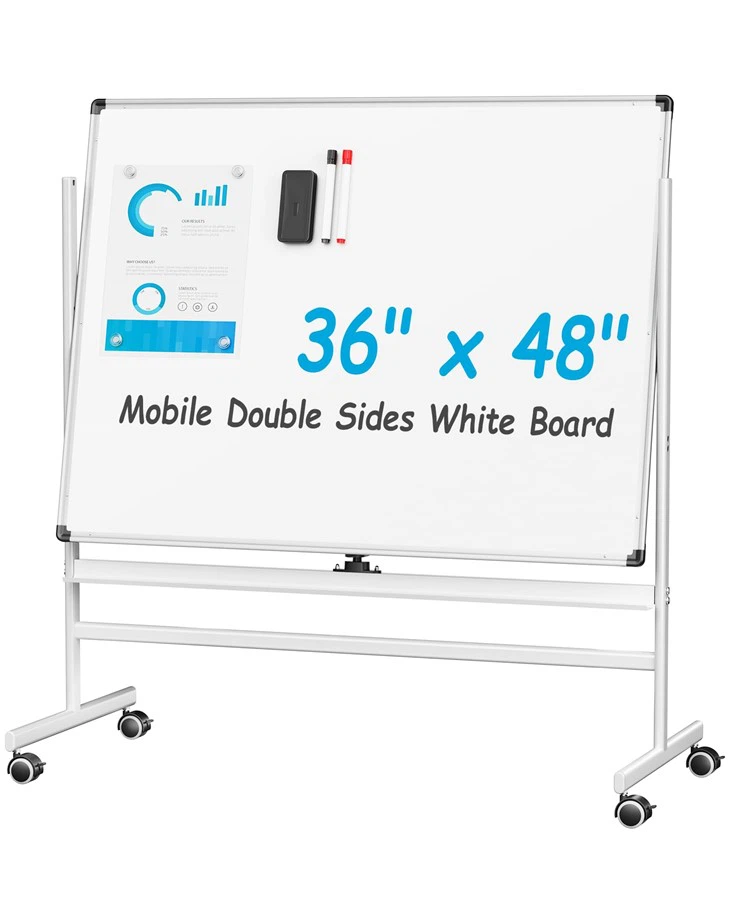
Wideny mobile whiteboards are built specifically for the demands of modern workplaces. We use heavy-gauge steel frames and high-quality swivel casters to ensure smooth mobility and rock-solid stability during writing. The surface features a premium baked enamel coating that delivers smooth writing and clean erasing-no ghosting, even with heavy use.
The height adjustment range accommodates users from children to adults, while the tilt function makes presentations more comfortable. Whether in offices, classrooms, or training centers, Wideny mobile whiteboards offer the flexibility to adapt, serving as reliable partners for team collaboration.


Summary
The evolution of the office whiteboard reflects broader changes in how we work. Fixed walls are no longer the only option-mobility, flexibility, and adaptability to diverse scenarios are becoming the new standard. When collaboration is no longer bound by space, creativity and efficiency can flourish.
If you are planning an office upgrade or equipping a learning environment, consider adding mobile whiteboards to your space-let ideas move freely.
For more information on Wideny mobile whiteboards or custom solutions, feel free to contact us.


