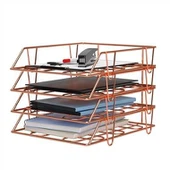

How much time do you waste looking for misplaced documents? Do you “file by pile”? Are you embarrassed by the appearance of your office when you meet with co-workers or a prospective client? Research proves that a clutter-free workspace helps us think more clearly and increases productivity. An organized desk or office also portrays a professional image, exuding competence and efficiency.
What’s the secret to creating and maintaining an organized workspace? While there is no “right” way to organize your office, the most critical factor in its sustainability is a true desire to make it work. Once that motivation is in place, you’ll find that the process of organizing your office is a lot more manageable than the stress caused by the clutter!
3 Steps to an Organized Office
1.Ask yourself the right questions — The first step in creating an effective organization system is to identify the primary problem that needs to be solved:
Is it a messy workplace (where desks and work surfaces are piled with paper)?
Is it difficult to find a document when you need it?
Is there someone else in the office who needs access to files?
Are some documents filed in hard copy and others filed on the computer?
In this “reflection” stage, it is imperative to bear in mind the individual needs of your business (e.g., do customers repeat their orders, or is each job unique?) and legal requirements for retaining documents in your industry.
2.Create a method of differentiation — One of the biggest organizational challenges is being able to distinguish one subject/project from another. Consider the types of documents you handle. Whether you choose to alphabetize a binder, color-code file jackets or keep records in electronic folders, create a system that allows you to clearly identify your materials. It is less important to determine where something “ought to” go as it is to figure out where you are most apt to look for it at a later date.
3.Position by priority — Implement the HOT-WARM-COOL-COLD method for handling work-related materials.Here’s how it works:
HOT projects/files are on the desk. These are the documents or files that you are currently working on right now. There can be several project files in a stand-up file holder so that they are in view all the time.
Behind you on a credenza or work surface are the WARM files for other important projects that are waiting for your attention.
The HOT and WARM files generally move back and forth between the two categories and locations. The important thing is to only work on documents for one project/subject at a time, but have the others within reach for when you need them.
In a drawer or work surface farther away are the COOL files that are no longer urgent but may need to be referenced.
In a file cabinet are those files that are COLD meaning that they are complete – and may or may not be retrieved at a future date if a new, related project comes up.
Organization Requires Practice
At the end of every work day, clear everything off your desk — except the item on which you’ll want to focus your attention when you start work the next morning. That file can be lying on the desk. Everything else should be put away. Knowing you’re prepared for the next day can help you relax and allow you to enjoy your evening.
In an office shared by multiple people, the new organization strategy must be communicated clearly and often until it becomes routine. Everyone must consistently do their part in order for the system to succeed over time.
Enjoy the Benefits of an Organized Office
As if being able to find what you need — when you need it — weren’t enough, you’ll also enjoy the newfound ease with which you’ll be able to quickly direct a colleague to a file or document they might need.